
PhD in Automobile Engineering: Eligibility, Fees, Admission & Scope
PhD in Automobile Engineering: Eligibility, Fees, Admission & Scope
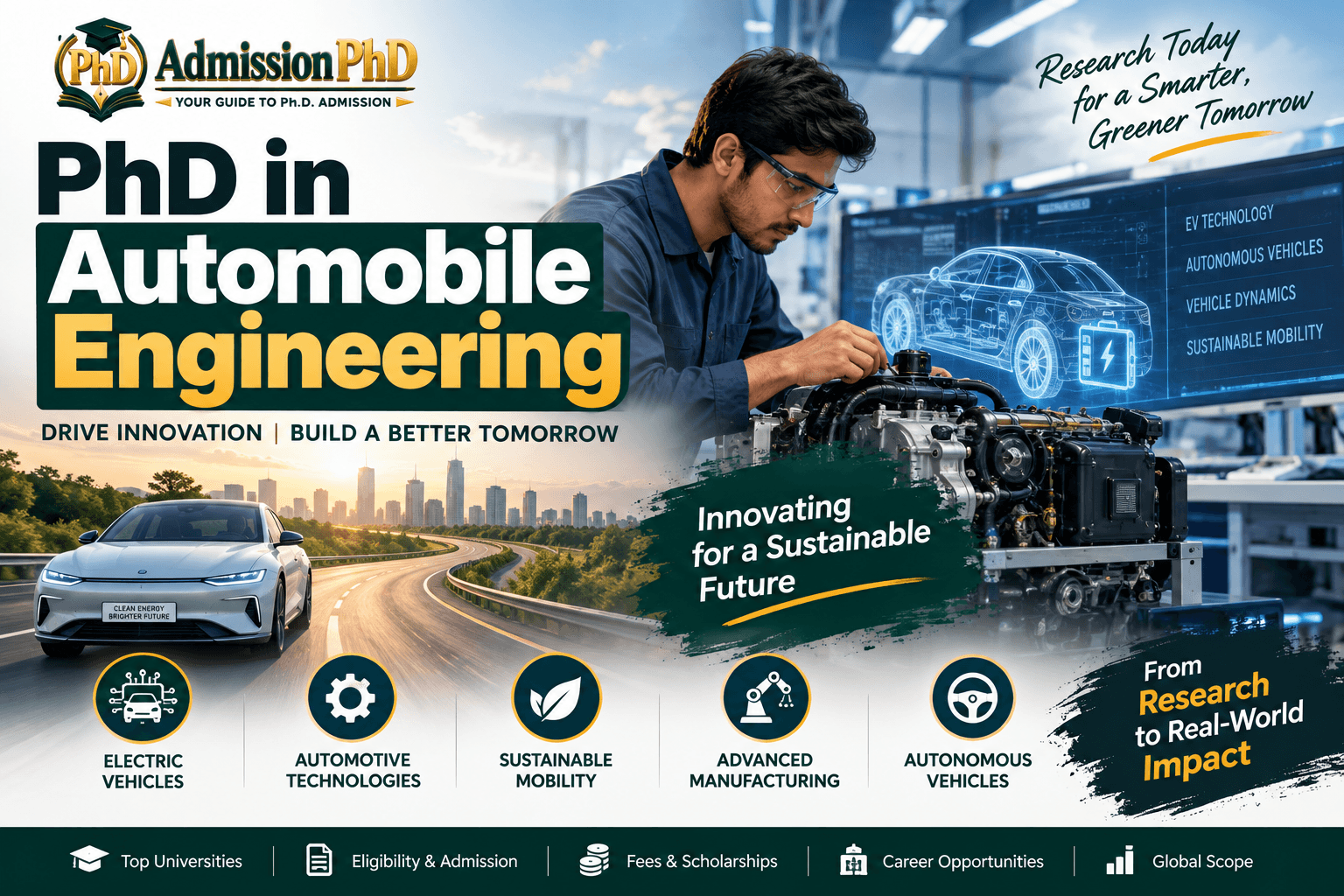
PhD in Automobile Engineering is a research-focused doctoral programme that allows students to conduct original research in areas such as electric vehicles, vehicle dynamics, automotive electronics, propulsion systems, autonomous vehicles and sustainable mobility. In India, automobile-focused PhD research may be offered through dedicated Automobile Engineering programmes or related disciplines such as Mechanical Engineering and Automotive Engineering.
Research can be done in areas such as electric vehicles, internal combustion engines, vehicle dynamics, automotive electronics, autonomous vehicles, alternative fuels, battery technology, intelligent transportation systems, vehicle safety, manufacturing and sustainable mobility.
Automobile engineering research can also overlap with disciplines such as mechanical engineering, electronics, materials science, artificial intelligence and energy systems. As such, some universities offer automobile focused research in wider doctoral programmes such as Mechanical Engineering while others have dedicated automobile or automotive research areas.
PhD Automobile Engineering at a Glance
| Programme | Doctorate in Automobile Engineering |
| Level | Doctoral / Research |
| Duration | Minimum 3 years in accordance with applicable PhD regulations; actual completion varies by university and research progress. |
| Eligibility | Relevant master's degree or university-approved qualification |
| Admission | Entrance test / national qualification / interview, depending on university |
| Research Areas | EVs, vehicle dynamics, automotive electronics, propulsion, safety, autonomous vehicles |
| Mode | Full-Time / Part-Time, depending on university |
| Career Areas | Automotive R&D, academia, research organisations, EV technology |
Understanding the PhD in Automobile Engineering Programme
A PhD Automobile Engineering is primarily a research programme, rather than a conventional classroom-based degree.
Students normally complete prescribed coursework and research methodology requirements before progressing to detailed research. Depending on the university and research area, the work may involve laboratory experiments, vehicle testing, simulations, mathematical modelling, field studies, software development, data analysis or a combination of these methods.
What Can Candidates Research in Automobile Engineering?
Potential research directions include:
The exact research topics available depend on the faculty, laboratories, research centres and supervisors available at a particular university.
Why Choose a PhD in Automobile Engineering?
Automobile engineering has developed into a multidisciplinary research field. Modern automotive research is no longer limited to conventional engines and mechanical components.
A doctoral scholar can work at the intersection of mechanical engineering, electronics, software, energy, materials and transportation.
- 1. Opportunity for Specialised Research: A PhD allows students to focus on a narrowly defined research problem rather than studying a broad collection of subjects.
- 2. Electric and Sustainable Mobility Research: Electric vehicles, battery systems, charging infrastructure and alternative propulsion technologies have created new research areas within automotive engineering.
- 3. Automotive R&D Opportunities: A doctorate can be relevant to research and development roles in automotive companies, research institutions, testing organisations and engineering organisations.
- 4. Academic Career Opportunities: Candidates interested in teaching and research can pursue academic positions, subject to the recruitment and eligibility requirements of the institution.
- 5. Interdisciplinary Research: Automobile research can combine mechanical engineering with artificial intelligence, electronics, computer science, materials science and energy engineering.
How Long Does a PhD in Automobile Engineering Take?
The duration varies according to the university, mode of study and progress of the research.
In general, doctoral programmes in engineering are structured around a minimum period of about three years, while the maximum period and extension rules depend on the university regulations.
For example, Amity University's part-time PhD Automobile Engineering at Noida lists a 3.5-year duration.
Vel Tech's doctoral information lists a minimum duration of 3 years for full-time PhD programmes and a longer minimum period for part-time study, with a maximum duration of 6 years in its published regulations.
Actual completion can take longer than the minimum because students may need time for:
PhD in Automobile Engineering Eligibility
The PhD Automobile Engineering eligibility requirements vary between universities.
A common route is a relevant master's degree in Automobile Engineering, Mechanical Engineering or another allied engineering discipline. However, universities may define accepted disciplines differently.
Common Eligibility Requirements
Depending on the university, candidates may need:
- A relevant master's degree
- Minimum prescribed marks or CGPA
- A relevant engineering background
- Research aptitude
- A research proposal or statement of purpose
- Entrance examination qualification, where applicable
- Personal interview
- Availability of an appropriate research supervisor
Some institutions may also offer direct PhD courses for eligible bachelor’s students.
It is recommended to cross-verify the eligibility criteria with the latest admission notification as the disciplines offered, minimum percentage required and exemptions may vary every year.
Students planning to pursue a PhD can also explore our detailed guide on PhD Admission in India to understand eligibility, entrance exams, application steps, and other important admission requirements.
How to Apply for a PhD Program in Automobile Engineering in India?
If candidates are searching for the best way on how to apply for a PhD program in automobile engineering in India, your first step would be to research which universities offer automobile-focused research or related doctoral programs.
The application process usually follows these steps:
- Visit the university's official research admission page.
- Check the current PhD notification.
- Verify eligibility for your engineering background.
- Identify available automobile/automotive research areas.
- Check faculty and supervisor availability.
- Prepare your research proposal or SOP.
- Register on the university's application portal.
- Upload academic and supporting documents.
- Pay the application fee.
- Appear for the entrance examination if required.
- Attend the personal interview.
- Complete admission and registration formalities if selected.
For example, VIT's research admission process uses VITREE, followed by a personal interview for shortlisted candidates. Its current January 2027 information states that the examination contains 100 MCQs, including technical and English communication sections.
At Amity, the published Automobile Engineering part-time PhD uses a subject-based written test followed by a personal interview.
PhD in Automobile Engineering Entrance Exam and Selection
There is no single entrance examination followed identically by every university.
Depending on the institution, selection may involve:
PhD in Automobile Engineering Fees in India
The PhD Automobile Engineering fees vary considerably depending on the institution, programme mode and additional charges.
Candidates should not compare only tuition fees. Other costs can include:
Top Universities to Explore for PhD in Automobile Engineering in India
Automobile-focused doctoral research may be offered under different programme titles. For example, some institutions place automotive research under Mechanical Engineering rather than offering a degree literally titled “PhD in Automobile Engineering.”
| University / Institute | Approx. Fees* | Programme Mode | Admission Basis |
|---|---|---|---|
| Amity University, Noida | ₹50,000/semester full-time | Full-Time | Subject-based written test + Personal Interview |
| IIT Delhi | ₹30,000–₹50,000 | Full-Time / Part-Time | GATE/NET/Entrance + Interview |
| IIT Bombay | ₹ 2.2 Lakhs+ | Full-Time | Eligibility + shortlisting + interview |
| IIT Madras | ₹25,000–₹75,000 | Full-Time / Part-Time | Entrance/NET/GATE + Interview |
| Anna University, Chennai | ₹17,000 per semester | Full-Time / Part-Time | GATE/NET/Entrance + Interview |
| B.S. Abdur Rahman Crescent Institute | Approx. ₹25,000/semester + applicable research/thesis charges | Full-Time / Part-Time | Institute PhD admission process |
*Fees are indicative and can change by admission cycle. Some figures represent published tuition or secondary fee listings rather than the complete cost of the doctorate. Candidates should verify the latest official notification before applying.
PhD in Automobile Engineering Syllabus
The syllabus is not identical across universities. Doctoral coursework generally includes research methodology, research ethics, statistics, literature review and advanced subjects related to the candidate's research area.
Doctoral coursework usually combines research methodology with subjects relevant to the scholar's research area.
Common Coursework Areas
- Research Methodology
- Quantitative Research Methods
- Qualitative Research Methods
- Engineering Mathematics
- Research and Publication Ethics
- Literature Review
- Statistical Methods
- Data Analysis
Advanced Automobile Engineering
- Vehicle Dynamics
- Automotive Propulsion
- Advanced Manufacturing
- Computational Methods
Dissertation/Research Work
The exact coursework depends on the university, department and selected research topic.
Research Areas for PhD in Automobile Engineering
A research topic is one of the most important decisions in a doctoral programme.
Electric and Hybrid Vehicles
Research can focus on:
Vehicle Dynamics
Research may examine:
Automotive Electronics
Research may involve:
Vehicle Safety
Potential research areas include:
Skills Required for a PhD in Automobile Engineering
A successful doctoral researcher needs more than subject knowledge.
Important skills include:
How to Choose a University for PhD in Automobile Engineering
When comparing universities, do not focus only on the university name.
Consider:
- 1. Supervisor Expertise: Find professors whose current research interests closely match your proposed topic.
- 2. Research Facilities: Check whether the institution provides relevant laboratories, testing facilities, simulation tools and research equipment.
- 3. Research Publications: Review recent publications by prospective supervisors and research groups.
- 4. Programme Mode: Check whether the university offers full-time, part-time or industry-sponsored research.
- 5. Fees and Funding: Compare tuition fees, research costs, scholarships and available fellowships between universities.
- 6. Industry Collaboration: Automotive research can benefit from collaboration with automotive manufacturers, testing organisations and research institutions.
For example, MIT-WPU's ARAI collaboration provides access to automotive-oriented research infrastructure such as engine test cells, simulation facilities, automotive electronics and noise and vibration laboratories.
Career Opportunities After PhD in Automobile Engineering
A career after doctorate in Automobile Engineering can develop across academia, automotive research, engineering R&D and technology organisations.
Academic Careers
PhD graduates can apply for teaching and research positions in universities and engineering institutions, subject to institutional recruitment criteria.
Possible roles include:
Automotive R&D
Automotive research organisations may require specialists in:
Research Organisations
Possible roles include:
Government and Public Research
Doctoral expertise may also be relevant to government-supported research institutions, testing organisations and transportation-related projects.
Automotive Technology and Startups
The growth of EVs, connected vehicles, autonomous systems and intelligent transportation creates opportunities for researchers with specialised technical knowledge.
Salary After PhD in Automobile Engineering
No specific salary is associated with any PhD degree. Salaries will depend on one's job profile, organisation, experience, region, finances and recruitment policies.
An indicative private/development sector salary range for a PhD could be shown as:
| Career Area | Indicative Salary Range |
|---|---|
| Research Engineer / Project Researcher | ₹4–8 LPA |
| Automotive R&D Engineer | ₹5–12 LPA |
| Automobile Engineering Specialist | ₹6–14 LPA |
| EV / Battery Researcher | ₹6–15 LPA |
| Vehicle Dynamics / Simulation Engineer | ₹5–12 LPA |
| Automotive Electronics / Embedded Systems Researcher | ₹6–15 LPA |
| Assistant Professor / Academic Researcher | ₹5–12 LPA |
| Senior Automotive R&D / Research Roles | ₹10–20+ LPA |
Future Scope of PhD in Automobile Engineering
The future research scope of automobile engineering is increasingly connected with technology, energy and sustainable transportation.
Important areas include:
The automotive industry will become more multidisciplinary. Engineers who are working in automobile engineering and electronics, AI, software, material sciences, or energy systems can cover several research topics.
PhD in Automobile Engineering vs PhD in Mechanical Engineering
The two doctoral routes can overlap significantly.
| Area | PhD in Automobile Engineering | PhD in Mechanical Engineering |
|---|---|---|
| Main focus | Automotive and mobility technologies | Broader mechanical systems |
| Vehicle dynamics | Major research area | Possible research area |
| EV research | Common | Possible |
| Engine research | Common | Possible |
| Manufacturing | Automotive-focused | Broad manufacturing research |
| Thermal systems | Automotive applications | Wider engineering applications |
| Research scope | More specialised | Broader |
| Interdisciplinary work | High | High |
The better fit depends on the candidate's research topic and the supervisors available at the university.
A candidate interested specifically in vehicle systems may look for an automobile-focused research group, while someone interested in broader mechanical systems may find a Mechanical Engineering PhD more suitable.
All Rights Resvered
Frequently Asked Questions
Related Articles

PhD in Architecture & Planning in India: Eligibility, Admission, Fees, Colleges & Career
Discover PhD in Architecture & Planning with details on eligibility, admission, fees, top colleges, scholarships, research areas, and career scope.

PhD in Hospitality: Eligibility, Admission, Fees & Career
Explore PhD in Hospitality eligibility, admission, fees, syllabus, research areas, top universities, scholarships

PhD in Retail: Eligibility, Fees, Admission & Career
Explore PhD in Retail eligibility, admission process, fees, syllabus, research areas, universities, scholarships, career opportunities and salary in India.